Every year, hidden electrical faults turn ordinary homes into serious fire risks. A damaged cord, loose terminal, or pinched wire can create an arc behind a wall. The danger may remain invisible until nearby materials ignite.
So, what is an afci breaker and why is it required by code? An Arc-Fault Circuit Interrupter detects dangerous arcing patterns that standard breakers may miss. It quickly interrupts power before a small electrical fault becomes a larger fire. This protection differs from a traditional circuit breaker, which mainly responds to overloads and short circuits.
The need is supported by industry evidence. The National Fire Protection Association’s Home Structure Fires reports identify electrical distribution and lighting equipment among important causes of residential fires. The U.S. Consumer Product Safety Commission has also reported that electrical malfunction fires cause hundreds of deaths and substantial property losses annually. Exact totals vary by reporting year. That limitation matters.
The National Electrical Code, published by the NFPA, requires AFCI protection in many residential locations, including bedrooms, living areas, kitchens, and laundry spaces. Requirements can change with adoption dates and local amendments. Check the authority having jurisdiction.
In practical terms, an AFCI breaker monitors the circuit continuously. It may trip when a nail damages cable or a loose connection produces repeated sparking. The interruption can feel inconvenient. It may prevent a much worse outcome.
Installation still requires care. An AFCI cannot repair damaged wiring or replace proper inspection. Manufacturers, licensed electricians, and local code officials provide the most reliable guidance. Understanding the device is useful. Verifying the installation is better.
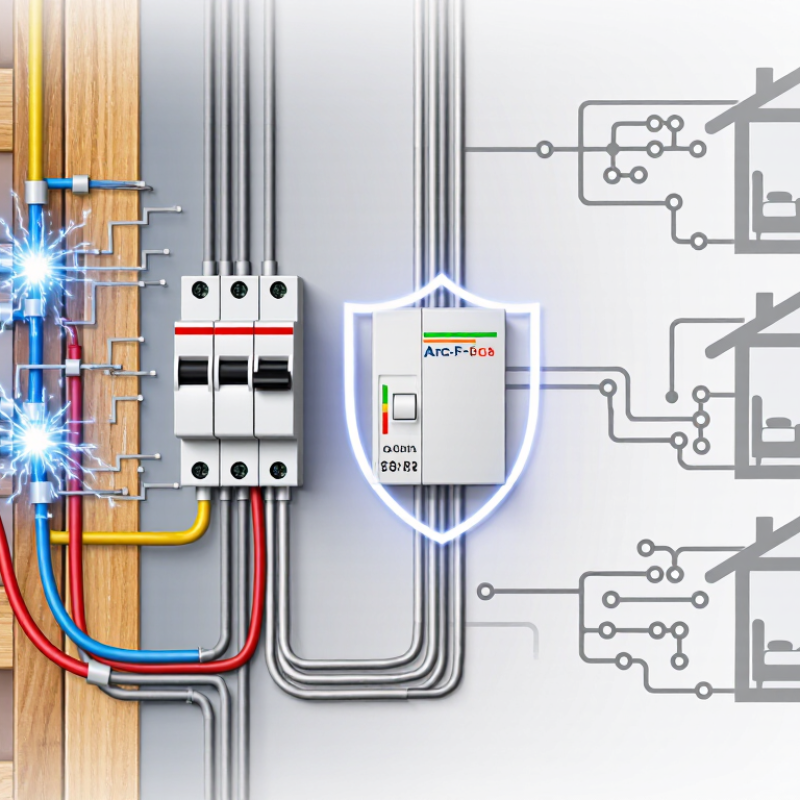
An AFCI breaker is designed to detect dangerous electrical arcing before it becomes a fire. It monitors the circuit’s current waveform for irregular signatures. A loose terminal, crushed cable, or damaged cord can create series or parallel arcs. These arcs may produce intense heat without drawing enough current to trip a standard breaker. When the pattern crosses its safety threshold, the AFCI disconnects power quickly.
This protection matters because electrical distribution and lighting equipment appeared in about 7% of U.S. home structure fires, according to the National Fire Protection Association’s Home Structure Fires report. The same report linked these systems to a higher share of civilian fire deaths. Code requirements, including National Electrical Code Section 210.12 in many jurisdictions, therefore place AFCI protection on numerous dwelling circuits. Requirements can differ by location and code edition. No detector is perfect. Nuisance trips still happen, and replacing the breaker without finding the fault misses the real problem. That is an easy mistake to make.
Tips: Test the breaker monthly using its test button. Reset it only after unplugging suspicious devices. If it trips repeatedly, inspect for loose connections, damaged insulation, moisture, or overloaded power strips. A qualified electrician should diagnose wiring faults. Record the circuit, appliance, and timing of each trip; those small details can reveal an intermittent arc.
An AFCI breaker detects dangerous electrical arcing that ordinary overcurrent protection may miss. Arcing can occur behind a wall, inside a damaged cord, or at a loose connection. Electrical codes commonly require AFCI protection in many dwelling circuits, although exact locations depend on local rules and building conditions.
The main types include branch/feeder AFCIs, combination AFCIs, and outlet branch-circuit AFCIs. A branch/feeder model protects wiring from the panel toward connected outlets. A combination model adds protection for both parallel and series arcs. An outlet branch-circuit type is installed near the first outlet and protects downstream devices. Portable AFCI devices also exist, but they serve narrower applications. The labels are not always intuitive.
Inside the breaker, current sensors monitor the waveform for unusual interruptions and repeating pulses. A small electronic processor compares those patterns with expected load behavior. When the signal suggests an arc, a trip mechanism opens the contacts quickly. Most AFCI breakers also include thermal and magnetic protection for overloads and short circuits. A built-in test button sends a simulated fault through a separate test circuit. If the breaker does not trip, it should not be treated as reliable. Installation quality matters too. A neutral mistake can cause nuisance trips or prevent proper operation. I have found that a simple wiring diagram is useful, but field conditions can make diagnosis less certain. Testing should follow the device instructions and applicable electrical requirements.
| Data Dimension | AFCI Type or Component | Primary Function | Typical Application or Location | Important Technical or Code-Related Fact |
|---|---|---|---|---|
| Purpose | Arc-fault circuit interrupter | Detects hazardous electrical arcing and disconnects the circuit before the arc can ignite surrounding combustible materials. | Residential and other occupancies where the adopted electrical code requires arc-fault protection. | An AFCI is intended to reduce fire risk from arcing faults; it is not a substitute for ordinary overcurrent protection or proper wiring practices. |
| Protection Principle | Electronic arc signature detection | Analyzes electrical current and voltage characteristics to distinguish potentially dangerous arcing from normal loads. | Branch circuits supplying receptacles, lighting outlets, and permanently connected equipment. | The device may respond to patterns such as irregular current, high-frequency components, and repeated interruptions associated with arcing. |
| Main Type | Combination-type AFCI circuit breaker | Provides protection against both series arcs and parallel arcs on the protected branch circuit, subject to the device design and listing. | Commonly installed at the panelboard as the branch-circuit overcurrent device. | Combination protection is broader than protection that responds only to one specific arc arrangement. |
| Main Type | Branch/feeder AFCI | Detects certain arcing conditions on branch circuits or feeders, depending on its rating and construction. | Older installations, feeders, or applications permitted by the locally adopted code edition. | Its permitted use depends on the applicable code edition, product listing, installation method, and authority having jurisdiction. |
| Main Type | Outlet-branch-circuit AFCI | Provides arc-fault protection from the first outlet or approved location downstream through the branch circuit. | Used where the wiring method and local code permit protection at an outlet location instead of at the panelboard. | Installation must follow the device instructions, including required upstream overcurrent protection and connection requirements. |
| Main Type | Portable AFCI | Provides localized arc-fault protection for connected portable equipment and cords. | Temporary or portable-use situations where a permanently installed AFCI is not available. | A portable device generally does not provide the same complete branch-circuit protection as a properly installed circuit breaker or outlet-branch-circuit device. |
| Internal Component | Current-sensing transformer or sensor | Measures current flowing through the protected conductors and sends a signal to the electronic detection circuit. | Located inside the AFCI enclosure around or adjacent to the monitored current path. | The sensing system must monitor the conductors required by the device design, including the neutral where applicable. |
| Internal Component | Arc-detection electronics | Processes electrical signals and evaluates whether the waveform contains characteristics of a hazardous arc. | Internal control section of the AFCI breaker or receptacle. | Detection logic is designed to reduce nuisance trips caused by normal switching, motors, dimmers, and electronic loads, although nuisance tripping can still occur. |
| Internal Component | Overcurrent protection element | Responds to sustained overloads and short circuits in the same general manner as a conventional circuit breaker. | Series-connected with the protected branch circuit. | AFCI protection and overcurrent protection are related but distinct functions; the circuit ampere rating must match the conductors and equipment. |
| Internal Component | Trip mechanism | Opens the circuit when the electronics or overcurrent element identifies a condition requiring interruption. | Mechanical switching assembly inside the breaker or protective device. | The mechanism must interrupt the circuit promptly and remain open until it is manually reset. |
| Internal Component | Line and load terminals | Provide the electrical connection between the supply, the protected branch circuit, and the device. | Line terminals connect to the source; load terminals connect to downstream conductors where the design requires them. | Incorrect terminal identification or conductor placement can defeat the intended protection and create a hazardous installation. |
| Internal Component | Neutral sensing path or pigtail | Allows the device to monitor and control the neutral relationship required for the circuit configuration. | Single-pole or multiwire branch-circuit installations, depending on the device design. | Neutral connections must be made exactly as specified; shared-neutral circuits may require a compatible two-pole or specially designed protective device. |
| User Interface | Test button | Creates an internal test condition so the user can verify that the device trips. | Front face of an AFCI breaker or AFCI receptacle. | Testing should be performed according to the manufacturer's instructions; a device that does not trip during a proper test should be evaluated by a qualified person. |
| User Interface | Trip indicator or diagnostic indicator | Shows that the device has tripped and, on some designs, provides information about the type or cause of the trip. | Front face of the protective device. | Indicator behavior varies by device design and should not be interpreted without the product instructions. |
| Code Requirement | Required locations | Protects designated dwelling-unit branch circuits where the adopted electrical code identifies a fire-risk concern. | Examples commonly include areas such as bedrooms, living spaces, hallways, kitchens, laundry areas, and other dwelling locations listed by the applicable code. | Exact locations and exceptions vary by jurisdiction, occupancy, local amendments, and the edition of the electrical code in force. |
| Code Requirement | Reason for code adoption | Addresses fire hazards caused by damaged cords, loose connections, pinched conductors, aging insulation, and other conditions that may create arcing. | New construction, renovations, additions, and specified replacement work. | Electrical code requirements are minimum safety provisions; local authorities may apply additional requirements or approved alternatives. |
| Protection Limits | AFCI versus GFCI | AFCI protection primarily addresses fire hazards from arcing, while ground-fault protection primarily addresses shock hazards from current flowing along an unintended path. | Some locations may require one type, the other type, or both. | An AFCI does not replace GFCI protection where ground-fault protection is required by the adopted code. |
| Installation Safety | Compatibility and listing | Ensures that the protective device is suitable for the panelboard, circuit configuration, conductor size, and intended use. | Any installation involving an AFCI breaker, receptacle, or other AFCI device. | Use only equipment approved for the specific application and follow the installation instructions and local inspection requirements. |
| Maintenance | Routine inspection and testing | Helps confirm that the device remains operational and that repeated tripping is not ignored. | Homes, apartments, offices, and other locations equipped with AFCI protection. | Frequent trips may indicate damaged wiring, a faulty appliance, an incompatible load, or a device problem and should be investigated rather than repeatedly reset. |
Electrical codes require AFCI protection because ordinary breakers may miss dangerous arcing. An AFCI breaker monitors the circuit for electrical patterns linked to arcing faults. These faults can occur behind walls, inside damaged cords, or at loose connections. The danger is real. The National Fire Protection Association reported that electrical distribution and lighting equipment appeared in about 32% of reported home fires from 2016 to 2020. These incidents also caused substantial property damage.
That is why NFPA 70 expanded AFCI requirements for many dwelling-unit circuits. The goal is early interruption, before an arc ignites nearby insulation, wood, or dust. AFCI protection is especially important in bedrooms, living areas, hallways, and other spaces with movable cords. Code requirements vary by jurisdiction, so installation should follow the locally adopted edition and a qualified electrician’s evaluation. Small details matter. The breaker must match the circuit, wiring method, and panel configuration.
AFCIs are not magic. They can trip because of compatible equipment, wiring damage, or installation errors. That inconvenience deserves investigation, not repeated resetting. The Electrical Safety Foundation International continues to identify electrical distribution equipment as a leading factor in home fire risk. Field experience also shows that aging connections can remain unnoticed for years. Code rules reduce risk, but they do not replace inspections, careful maintenance, or correcting damaged cords. One limitation remains: no protective device can detect every possible failure.
An AFCI breaker detects dangerous electrical arcs before they heat nearby wiring and start a fire. Code commonly requires AFCI protection in many 120-volt living areas. Requirements can change with local adoption and building updates.
AFCI breakers are typically installed in the main electrical panel. They often protect bedrooms, living rooms, dining rooms, hallways, closets, and similar areas. Many modern codes also include kitchens, laundry spaces, and finished basements. The exact list depends on local rules. That location matters. An AFCI may also be installed at a receptacle in limited situations, but panel protection is widely used for complete branch-circuit coverage. Older wiring can complicate the installation. A qualified electrician should inspect compatibility before replacement.
Tips: Read the panel label carefully, then test the breaker using its test button. It should trip and reset normally. Do not confuse AFCI protection with GFCI protection; they address different hazards. A nuisance trip may indicate an appliance problem, loose connection, shared neutral issue, or incompatible wiring. Resetting it repeatedly is not a repair. Small details matter. In practice, installation decisions are sometimes less obvious than a code chart suggests. I would verify the current local requirement instead of relying on memory, especially during remodeling or room conversion.
Testing, Resetting, and Maintaining an AFCI Breaker
An AFCI breaker detects dangerous electrical arcs before they start a fire. Regular testing confirms that its protection still responds correctly. Press the test button once each month, unless the instructions specify another schedule. The breaker should trip immediately, cutting power to the protected circuit. If it does not trip, stop using that circuit and contact a qualified electrician. Do not open the breaker panel or attempt internal repairs.
To reset it, move the handle fully to the off position first. Then push it firmly to on. A half-reset may look normal but leave the circuit without power. If the breaker trips again, unplug recent devices and reset it once. Repeated tripping can indicate damaged wiring, moisture, an overloaded circuit, or a faulty appliance. It is not something to ignore. Guessing can waste time.
Tips: Keep the panel dry and accessible. Check for heat, burning smells, loose covers, or discoloration. Test after electrical alterations or unexplained trips. Labeling each circuit helps identify the affected room quickly. Never force a stubborn handle. Code requirements vary by location, room, and building type, so local rules matter. A qualified electrician can verify installation details and investigate recurring faults. Maintenance is simple, but it is easy to postpone. That is the part worth reconsidering.
Testing, resetting, and maintaining an Arc-Fault Circuit-Interrupter (AFCI) breaker helps reduce the risk of fires caused by dangerous electrical arcing. The chart shows the expected circuit state during a basic AFCI functional test.
The breaker is ON and the protected circuit is energized.
The AFCI should trip, opening the circuit and removing power.
Move the handle fully to OFF, then back to ON to restore power.
If the breaker will not reset or trips repeatedly, leave it off and contact a qualified electrician.
Expected state scale: 1 = circuit energized, 0 = circuit de-energized. AFCI requirements vary by electrical code edition and location, but modern residential codes commonly require AFCI protection in many living areas, bedrooms, kitchens, laundry areas, hallways, closets, and similar spaces.
It detects dangerous electrical arcing that ordinary overcurrent protection may miss. Arcing can occur behind walls, inside damaged cords, or at loose connections.
Common types include branch/feeder, combination, and outlet branch-circuit devices. Portable versions serve narrower applications. The labels can feel confusing.
Sensors monitor the electrical waveform for repeated pulses or unusual interruptions. An electronic processor compares those patterns with normal load behavior.
The trip mechanism opens the contacts quickly. Most AFCI breakers also respond to overloads and short circuits through thermal and magnetic protection.
They are commonly installed in the main electrical panel. They may protect bedrooms, living rooms, hallways, closets, kitchens, laundry areas, and finished basements.
No. Local electrical rules and building conditions affect the required locations. Room conversions and remodeling may change the applicable requirements.
Press the built-in test button, then check whether the breaker trips and resets normally. If it does not trip, do not treat it as reliable.
Possible causes include an appliance fault, loose connection, shared neutral, or incompatible wiring. Repeated resetting is not a repair. Older wiring needs careful inspection.
This guide explains what is an afci breaker and why is it required by code. An Arc-Fault Circuit Interrupter (AFCI) breaker is designed to detect dangerous electrical arcing, which can occur when wiring is damaged, loose, or overheated. Unlike a standard breaker that mainly responds to overloads and short circuits, an AFCI monitors irregular electrical patterns and quickly disconnects power when it identifies a potential arc. The article also introduces common AFCI types, such as combination and branch/feeder models, along with their key internal components, including sensing circuits, electronic controls, and a tripping mechanism.
AFCI protection is required in many areas because it helps reduce the risk of electrical fires, particularly in residential circuits supplying bedrooms, living spaces, and other designated locations. Proper installation depends on local electrical requirements and the circuit design. The guide also explains how to test and reset an AFCI breaker, recognize nuisance tripping, and maintain the device by checking connections and responding to repeated trips.

Phlox Energy