Solar connectors are compact, but their current rating can affect the safety and performance of an entire photovoltaic string. A common search is “what is the maximum current rating for standard solar connectors”? There is no single rating for every connector. Many common products are rated around 30 to 40 amps, but the exact limit depends on the model, cable size, and operating conditions. Check the product datasheet. The number molded onto a connector is a useful clue, not the whole answer.
On a sunny roof, a connector may heat up under sustained current, especially where cables are tightly bundled or exposed to high temperatures. Installers should compare the connector’s rated current with the module’s short-circuit current and follow the manufacturer’s instructions for any required safety margin or temperature derating. A 40-amp rating does not automatically make every cable or connection suitable for 40 amps. Details matter. Connector compatibility matters, too; parts that look alike may not be approved for mating. It is easy to focus on the printed rating and miss these practical limits. I would not treat a general range as a specification. Before choosing or replacing a connector, confirm its datasheet, cable range, and environmental ratings, and have a qualified solar professional review uncertain combinations.
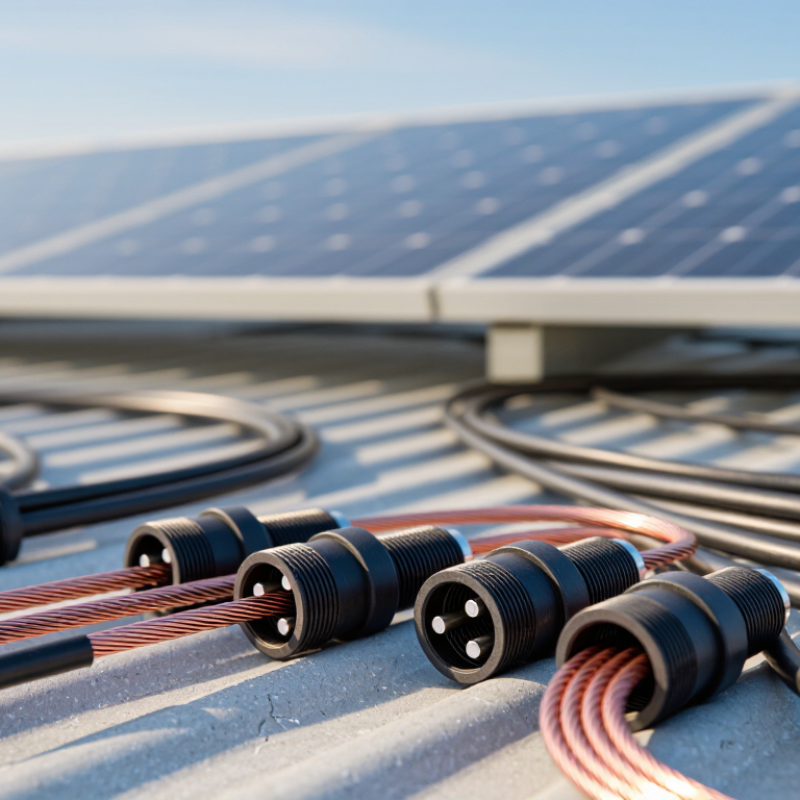
Many common snap-lock solar connectors carry a 30 A current rating. That number describes a tested operating limit, not a promise that every installation can safely carry 30 A. Contact design, cable size, crimp quality, and surrounding temperature all matter. A connector may run hotter when installed in direct sun or joined to an undersized cable. Check the product datasheet for its rated current and wire range. Compatibility matters, too; two connectors that look alike are not automatically suitable for mating.
Tips: Check both connector halves and the cable rating. Use the specified crimp tool, then inspect the contact for a secure, even crimp. Keep connections clean and fully seated.
It is easy to over-trust the number printed on a connector. I would not treat 30 A as a target. In a solar string, actual current depends on the module arrangement and operating conditions; the weakest-rated component sets a practical limit. For example, a connector beside a warm rooftop panel may face more heat than one in a shaded test setup. Follow the equipment manufacturer’s instructions and have a qualified installer verify the design when ratings or compatibility are unclear. Small details matter.
China Best Solar Connectors: What Is the Maximum Current Rating?
How IEC 62852 Covers PV Connectors Rated Up to 1,500 V DC
IEC 62852 addresses safety and testing requirements for photovoltaic connectors used in DC systems up to 1,500 V. That voltage limit does not set one universal current rating. The maximum current depends on the connector’s design and declared specifications, including the permitted cable size and operating temperature. Check the exact model’s datasheet. A connector marked for 1,500 V DC may not suit every high-current installation.
During selection, match the connector rating to the cable, module, and expected system conditions. Temperature matters: sunlight can heat a connector, while poor crimping or loose contact can add resistance. That detail is easy to miss. IEC testing supports reliable performance when connectors are used as specified, but it cannot correct an unsuitable cable or careless assembly. I would verify compatibility before installation, even when two connectors appear to fit.
Tips: Confirm the rated current for the actual cable size and ambient conditions. Keep mating connectors compatible, use the specified crimping tool, and inspect the finished connection. If the datasheet is unclear, pause and ask a qualified installer. One extra check helps.
IEC 62852 covers photovoltaic connectors rated up to 1,500 V DC and 125 A per contact.
How to read this chart: 125 A per contact is the upper current limit within the standard’s scope—not a rating for every connector. Actual current ratings depend on the specific connector and its operating conditions; check the product datasheet.
Reference: IEC 62852, Connectors for DC-application in photovoltaic systems — Safety requirements and tests.
A solar connector’s current rating is not a promise that every installation can carry that current. The actual limit depends on the connector specification, cable, and operating conditions. Check the manufacturer’s datasheet for the approved conductor size and temperature range. A cable that is too small can heat up under load, even when the connector itself has a higher rating. Cable length, insulation type, and bundled runs also affect heat dissipation. Small details matter.
Temperature can reduce usable ampacity. A cable in direct sun on a dark roof may run hotter than one in a shaded, ventilated space. Contact resistance matters too: an improperly crimped or incompletely seated contact can create a small, resistive hot spot. For perspective, a 1 milliohm contact carrying 20 amps dissipates about 0.4 watts locally. That may sound minor, but heat concentrated in a small area deserves attention. Inspect crimps with the specified tool, confirm the cable is fully seated, and compare the complete circuit against the relevant ratings. I would not rely on a connector’s headline current figure alone; installation conditions can change the answer.
Solar connector current ratings often cluster around 30 A, while some models are specified up to 45 A. Higher is not automatically better. The stated limit applies under defined conditions, including conductor size, contact temperature, and assembly quality. A connector marked 45 A may not safely carry that current in every rooftop setup. Heat changes things. For example, a cable in full sun beside a warm module can raise connector temperature. A poor crimp can add resistance and create more heat. This detail is easy to overlook.
Compare the rating with the system’s actual current, then check the technical sheet for wire range, temperature limits, and compatible mating parts. A 30 A connector may be suitable when the design current stays within its rated conditions. A 45 A model may offer extra capacity, but only if the cable, contacts, and installation method support it. Do not connect visually similar parts unless compatibility is confirmed. Fit matters. Inspect crimp quality and keep connections clean and dry. A rating printed on the housing is only one part of the decision. I would still verify the test conditions; product tables do not always make them clear.
Comparison of representative photovoltaic connector current-rating tiers. A 30 A rating is common in product specifications, while some models are rated up to 45 A.
| Rated Current | How Common Is It? | Typical Application | What to Verify |
|---|---|---|---|
| 20 A | Available in lower-current product specifications. | Smaller PV wiring systems where the connector, cable, and circuit are all rated for the expected current. | Confirm that the connector’s rating is sufficient for the module or string current under the installation conditions. |
| 25 A | Found in some product specifications. | PV connections designed around components with current ratings in this range. | Check the permitted cable cross-section, crimp contact, and operating-temperature conditions. |
| 30 A | Common rating in product specifications. | Many general-purpose PV connections, provided the complete circuit is rated appropriately. | Do not assume every connector with the same appearance has the same current rating or is compatible with every other connector. |
| 35 A | Available in some higher-current product specifications. | Systems requiring a connector rating above 30 A, subject to the manufacturer’s installation requirements. | Verify the exact connector model’s datasheet and approved conductor sizes. |
| 40 A | Available in selected product specifications. | Higher-current PV connections where all connected components are rated for the design current. | Check the rated current at the stated ambient temperature and with the specified cable and contact combination. |
| 45 A | Some models reach this rating; it is not a universal rating. | Applications specifically designed around a connector system whose published rating is 45 A. | Use only with the exact compatible connector parts, cable, and installation method specified by the manufacturer. |
Important: A connector’s maximum current rating is product-specific, not determined by appearance alone. The allowable current depends on the manufacturer’s specification and installation conditions, including conductor size, ambient temperature, and connector assembly. Select components to meet applicable electrical codes and standards, and follow the product datasheet.
A solar connector’s maximum current rating is not a design target. Start with the module’s short-circuit current, Isc, on its datasheet, then apply the 1.25× design factor used in NEC 690.8. A 15 A Isc becomes 18.75 A before checking the connector. For parallel strings, calculate the combined current at the relevant circuit point. Small details matter.
The connector’s published rating must cover that calculated current under the actual operating conditions. Check temperature limits, conductor size, voltage rating, and any manufacturer derating tables. IEC 62852 sets safety requirements for PV connectors, while the manufacturer’s datasheet gives the specific operating limits for its product. Do not assume two connectors with similar shapes have equivalent ratings. IEA PVPS’s Trends in Photovoltaic Applications 2024 reports that global installed PV capacity exceeded 1.6 TW by the end of 2023, making consistent component checks increasingly important across large arrays. On site, I would record the datasheet value beside the string calculation. It feels repetitive, but it can catch a mismatch before installation.
It sets safety and testing requirements for connectors in DC systems up to 1,500 volts.
No. Current capacity depends on the connector design, approved cable size, and operating temperature.
Check the exact connector model’s datasheet. Confirm its rating for your cable size and expected conditions.
An undersized cable can heat under load, even if the connector has a higher current rating. Small details matter.
Direct sun can heat cables and connectors. Hotter operating conditions may reduce usable ampacity.
Higher contact resistance can create a concentrated hot spot. For example, 1 milliohm at 20 amps dissipates about 0.4 watts.
Not necessarily. Check compatibility, use the specified crimping tool, and confirm the cable is fully seated. I would not rely on appearance alone.
Pause and ask a qualified installer. One extra check helps.
Standard solar connectors are commonly rated for a maximum current of around 30 A, although some models are designed to handle up to 45 A. Their voltage rating and current capacity are separate specifications: IEC 62852 addresses photovoltaic connectors rated up to 1,500 V DC, while the permitted current depends on the connector’s construction and operating conditions. So, what is the maximum current rating for standard solar connectors? In many common applications, it is 30 A, but the exact figure must be confirmed for the specific connector.
Actual ampacity can be affected by cable size, ambient temperature, and contact resistance. Undersized cable, high temperatures, or poor electrical contact can increase heating and reduce safe current capacity. When designing a PV circuit, apply the 1.25× Isc design factor where appropriate, then compare the result with both the cable and connector ratings. Always check the manufacturer’s datasheet and use components rated for the system’s conditions.

Phlox Energy