A main circuit breaker can fail quietly before it fails completely. One morning, the handle may feel loose, the panel may smell warm, or lights may flicker without warning. Homeowners often ask, “what causes a main circuit breaker to fail completely?” The answer usually involves several conditions, not one obvious defect. Overheating, corrosion, loose connections, repeated overloads, short circuits, mechanical wear, and manufacturing defects can all contribute.
The National Fire Protection Association reported an estimated average of 35,150 U.S. home fires involving electrical distribution and lighting equipment from 2015 through 2019. These fires caused approximately 470 civilian deaths, 1,100 injuries, and $1.3 billion in direct property damage. A breaker is designed to interrupt dangerous current, but it can deteriorate when heat repeatedly damages its internal contacts. Mike Holt, a licensed electrical contractor and electrical educator, explains, “A circuit breaker is designed to protect the conductors, not the equipment.” That distinction matters. The breaker may operate correctly while an appliance, connection, or wiring problem remains.
This guide examines five practical warning areas: excessive heat, loose terminals, aging components, moisture, and persistent tripping. Look closely. Discoloration around the breaker, a buzzing panel, or a burning-plastic odor should never be dismissed. A non-resetting breaker may indicate a continuing fault, not a defective switch. Sometimes, the wrong conclusion feels convenient. It may also be dangerous. Professional testing should confirm whether the problem involves the breaker, the service conductors, or the wider electrical system. The goal is not merely restoring power. It is identifying why protection failed and preventing the same fault from returning.
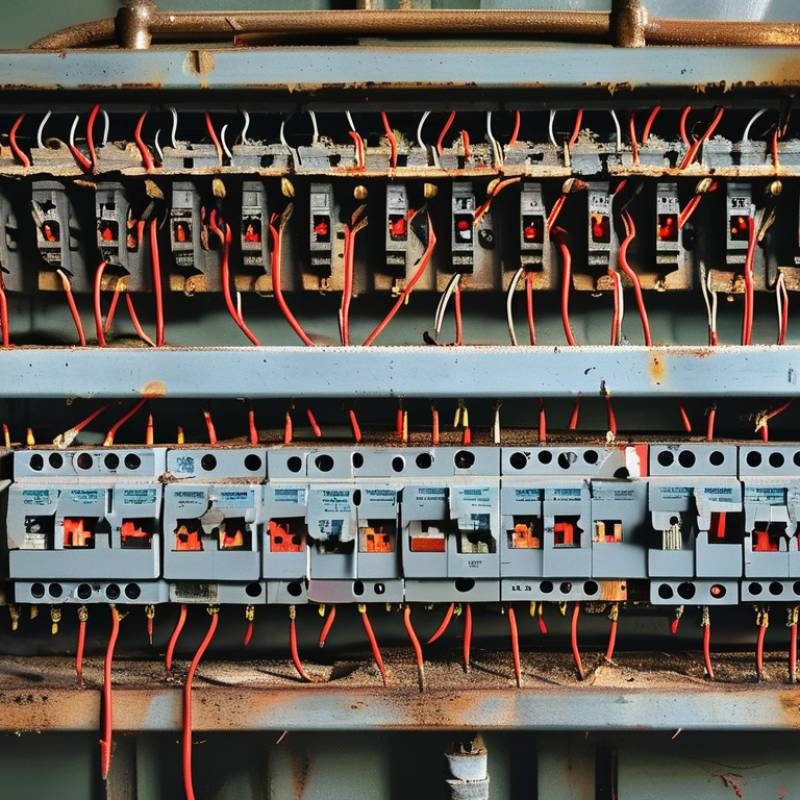
A main circuit breaker can fail when sustained overload creates excessive heat. NEC 210.20(A) requires continuous loads to be calculated at 125% of their expected current. A load operating for three hours or more may be continuous. For example, a 16-amp continuous load needs protection sized for at least 20 amps, before other loads are added. Skipping this calculation is a common mistake.
Tip 1 List every continuous load, including heaters, lighting, and equipment that runs for long periods.
Tip 2 Add noncontinuous loads separately.
A qualified electrician should verify the total against the service rating. Local code adoption can vary, so confirm the applicable requirements.
Loose terminals can also produce heat. Look for darkened insulation, melted plastic, or a sharp burnt odor near the panel. Do not touch energized parts.
Tip 3 Have the connections inspected and torqued according to the panel manufacturer’s specifications.
Tip 4 Never treat repeated tripping as a nuisance. It may indicate overload, a damaged breaker, or a serious wiring problem.
Tip 5 Record when the breaker trips and what was running. This simple detail can expose a pattern.
I would not rely on appearance alone; a breaker may look normal while its internal contacts have weakened. An electrician can test the circuit, measure current, and check voltage drop safely. Overlooking one large continuous load can invalidate an otherwise careful calculation.
5 Tips: What Causes a Main Circuit Breaker to Fail?
Trace Short Circuits: Match Breaker Interrupt Ratings to UL 489 Tests
A main circuit breaker can fail when fault current exceeds its interrupt rating. Start by tracing the circuit, not guessing from the breaker’s appearance. Look for scorched insulation, loose terminals, damaged bus bars, and moisture near the enclosure. A clamp meter can identify unusual load current, but it cannot replace a proper fault-current calculation. That limitation matters.
Check the available short-circuit current at the installation point. Then compare it with the breaker’s marked interrupt rating. The rating must meet or exceed the calculated fault current. Never assume a larger frame size provides safer protection. It may not. UL 489 testing evaluates critical performance, including overload operation, short-circuit interruption, endurance, and dielectric strength. These tests help confirm that a listed breaker can open safely under defined conditions.
Inspect connections for heat damage and torque them according to the equipment instructions. Replace breakers showing melted plastic, pitted contacts, repeated tripping, or a burning odor. Investigate why the trip occurred before resetting it. A breaker that trips repeatedly may be protecting against a hidden short circuit, not causing the problem. In practice, field conditions are rarely perfect. Calculations can be outdated, labels can be wrong, and one overlooked conductor can change the risk. A qualified professional should verify the system before any replacement or re-energizing work.
A main breaker can fail because of a short circuit beyond its interrupting rating, repeated overloads, loose connections, overheating, mechanical wear, or moisture and contamination. Always compare the available fault current with the breaker’s marked interrupting rating and use equipment evaluated to UL 489 requirements.
Common interrupting-rating values for low-voltage molded-case circuit breakers
Values are shown in kA RMS symmetrical and represent common marked interrupting-capacity steps. The correct rating depends on the calculated available fault current at the installation point.
A failing main circuit breaker may begin with a loose termination. The connection can look secure while carrying excessive heat. NEC 110.14(D) requires terminals, pressure connectors, and splicing devices to follow the manufacturer’s instructions, including specified torque. This requirement matters because improper tightening changes the contact pressure. Too little torque can increase resistance. Too much torque may damage threads or deform the terminal.
During an inspection, de-energize the equipment and verify the absence of voltage with properly rated test equipment. Check for darkened insulation, melted plastic, cracked terminals, or a sharp burnt odor. Then use a calibrated torque screwdriver or wrench. Match the conductor size, terminal rating, and torque value exactly. Do not estimate by feel. That habit is unreliable.
NFPA reported an estimated 35,150 U.S. home fires involving electrical distribution and lighting equipment from 2016 through 2020. These fires caused approximately 470 civilian deaths, 1,110 injuries, and $1.3 billion in direct property damage. The report does not assign every event to loose terminations, but it shows the consequences of electrical heating.
Field conditions are rarely perfect. Corrosion, vibration, and repeated thermal cycling can weaken a connection over time. A final torque check may feel excessive, yet skipping it can leave an invisible failure point. Recheck critical terminations after major maintenance, and document the measured torque for reliable future inspections.
Heat damage often begins at a loose, corroded, or poorly torqued connection. Resistance rises there, creating a small but persistent heating point. During a loaded inspection, use a calibrated infrared camera to compare each terminal with nearby conductors. A connection exceeding its 75°C rating deserves immediate attention, especially inside a warm panel.
Look for darkened insulation, brittle wire jackets, melted plastic, or a sharp burnt odor. These details support the temperature reading. Do not rely on color alone. A clean-looking terminal can still run hot. Ambient temperature, load size, and camera angle can also affect infrared results. Record the circuit load and the hottest measured location.
A breaker that trips repeatedly may be protecting the wiring, not failing itself. However, heat damage can weaken its internal parts over time. Disconnect power before opening or servicing the panel, and have a qualified electrician verify the circuit. The connection should be inspected for correct conductor size, proper stripping, and manufacturer-specified torque. Replace damaged components rather than simply tightening them.
A mistake worth admitting: one normal reading does not prove the connection is safe. Loads change throughout the day. Recheck the circuit during its highest practical demand, and compare readings over time. Scrap marks, loose hardware, and repeated temperature rise often reveal a problem that a single inspection misses.
A main circuit breaker can age faster after repeated fault interruptions. Each event creates heat, pressure, and an electric arc inside the breaker. Contacts may erode, arc-control parts can weaken, and the trip mechanism may lose its original timing. The outside may still look normal. That is the dangerous part.
Track every interruption in a maintenance log. Note the date, suspected fault, reset time, and any burning smell or crackling sound. During a de-energized inspection, a qualified electrician should check discoloration, loose terminals, brittle insulation, and unusual mechanical resistance. A stiff handle matters. So does a breaker that trips without a clear cause.
Do not treat repeated resetting as a repair. Testing should include insulation condition, trip operation, terminal torque, and thermal signs around the enclosure. Test equipment must match the breaker’s rating and installation conditions. After several serious fault interruptions, replacement is often safer than continued service, especially in older panels or heavily loaded circuits. The exact limit is not universal. It depends on fault magnitude, breaker design, maintenance history, and the manufacturer’s technical data. I have seen visual inspections miss internal contact damage, so appearance alone is weak evidence. When records are incomplete, choosing the cheapest option may create the most uncertainty. A licensed professional should isolate the circuit and confirm the replacement is correctly rated before re-energizing it.
: It can fail when fault current exceeds its marked interrupt rating. The rating must meet or exceed the calculated fault current. A larger frame does not automatically provide safer protection.
Trace the circuit and calculate available short-circuit current at the installation point. A clamp meter shows load current, not full fault-current risk. That limitation matters.
Check for darkened insulation, brittle wire jackets, melted plastic, or a burnt odor. Inspect terminals for loose, corroded, or poorly torqued connections. Clean-looking parts can still run hot.
Use a calibrated infrared camera during a loaded inspection. Compare each terminal with nearby conductors and record the hottest location. A reading above 75°C requires immediate attention.
Yes. Repeated trips may indicate a hidden short circuit or overloaded wiring. Do not keep resetting the breaker without investigating the cause. Resetting is not repair.
Internal contacts can erode, and arc-control parts may weaken. The trip mechanism may also lose its original timing. The exterior may look normal.
Consider replacement after several serious fault interruptions or visible heat damage. Replacement is especially important in older panels or heavily loaded circuits. The exact limit depends on design and maintenance records.
Record the interruption date, suspected fault, reset time, odors, and unusual sounds. Also note temperature readings, circuit load, and inspection findings. Incomplete records increase uncertainty.
No. Inspect conductor size, stripping, damage, and specified torque. Replace melted or weakened components instead of simply tightening them. One normal reading proves little.
A main circuit breaker can fail for several reasons, and understanding what causes a main circuit breaker to fail completely starts with checking the conditions around it. Overloaded continuous circuits may generate excessive current when they are not sized at 125% as required by NEC 210.20(A). Short circuits can also damage a breaker if its interrupting rating is not appropriate for the available fault current and verified through applicable UL 489 testing. Loose or poorly tightened terminations create resistance, leading to heat buildup and unreliable operation; connections should be tightened to the manufacturer’s specified torque in accordance with NEC 110.14(D).
Heat damage is another warning sign, especially when connection temperatures exceed the 75°C rating. Discoloration, melted insulation, or warped components should prompt a professional inspection. Finally, breakers can weaken after repeatedly interrupting faults, even if they appear functional. Testing and replacing breakers that have experienced multiple fault interruptions helps maintain dependable protection. Any inspection, measurement, or replacement should be performed by a qualified electrician using appropriate safety procedures.

Phlox Energy