Top 10 Reasons Ceramic Fuses Blow Slower Than Glass Fuses?

Time:2026-10-11 Author:Amelia
0%

Why do ceramic fuses blow slower than glass fuses? The answer is more complex than a simple material comparison. Fuse speed depends on rated current, overload magnitude, ambient temperature, I²t performance, and the fuse’s time-current curve. Ceramic construction often uses silica or other arc-quenching filler. This structure can absorb heat and control the electrical arc after the fusible element melts. A glass fuse usually provides less thermal containment and may respond differently during moderate overloads.

Industry standards support a careful comparison. IEC 60127 defines performance and testing requirements for miniature fuses, while UL 248-1 addresses low-voltage fuse safety and operating characteristics. These standards do not state that every ceramic fuse is slower. They emphasize tested time-current behavior. Littelfuse’s Fuseology technical guidance also explains that interrupting rating, melting I²t, and application conditions strongly affect fuse response. The same current can produce different results in two fuses with identical ampere ratings.

This article examines the top 10 reasons ceramic fuses may appear slower than glass fuses. It considers filler material, thermal mass, element design, surge tolerance, and arc suppression. A 2-amp ceramic fuse in a power supply may survive a brief transformer inrush, while a visually similar glass fuse opens sooner. That shortcut is incomplete. Some ceramic fuses are fast-acting, and some glass fuses are time-delay types. Datasheet curves matter more than appearance. Real-world testing remains essential, especially when replacing a fuse in medical, industrial, or safety-critical equipment.
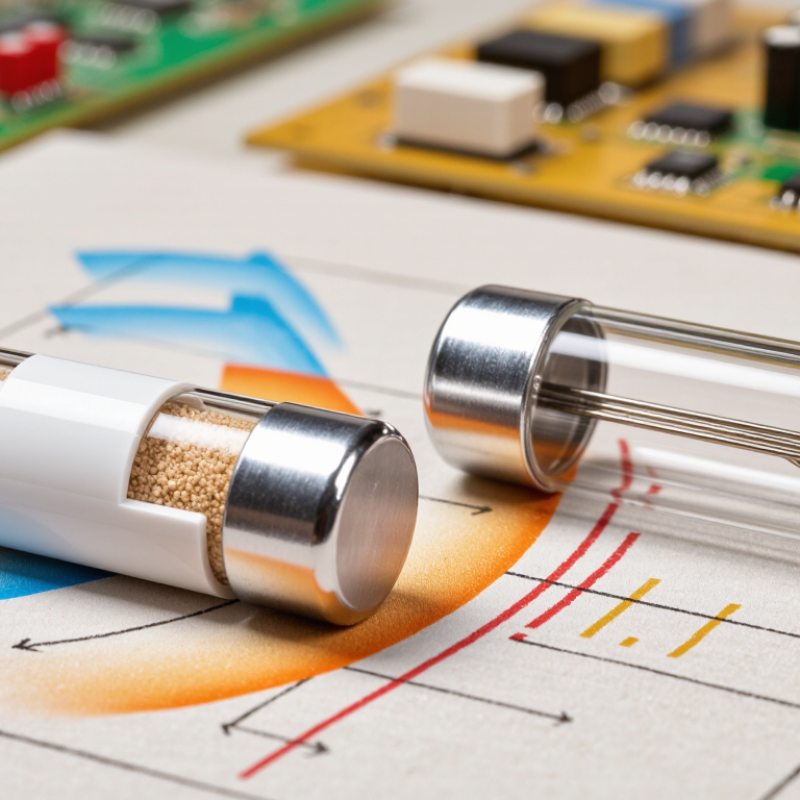
Top 10 Reasons Ceramic Fuses Blow Slower Than Glass Fuses?

Ceramic vs. Glass Fuse Bodies: IEC 60127 Time–Current Curves

Top 10 Reasons Ceramic Fuses Blow Slower Than Glass Fuses?

The word “slower” needs careful handling. Ceramic and glass bodies do not automatically create different fuse speeds. IEC 60127 time–current curves define how a fuse responds to overloads. The curve depends on the fuse element, rated current, construction, and tested conditions. Ceramic bodies often support higher thermal stability and stronger arc control. Some designs also use sand or another filler, which absorbs heat and helps suppress arcing. The result can be a longer opening time during moderate overloads. Not always, though.

In practical testing, a ceramic fuse may tolerate a short inrush current better than a similar glass fuse. Its internal mass can delay temperature rise. A glass body may reveal a broken element quickly, but visibility does not prove faster operation. Compare the actual IEC 60127 time–current curve, not only the body material. A common mistake is comparing different ratings or fuse categories. That can produce a misleading conclusion.

Tips: Match the fuse rating, characteristic, and interrupting capacity. Plot the expected overload against the curve. Check ambient temperature, because heat changes operating time. A meter cannot show the complete time–current behavior. Use controlled testing and follow the manufacturer’s verified data. I would also question the word “blow”; some fuses open gradually under overload, and that difference matters.

Reasons 1–2: Sand Filling and Higher Arc-Quenching Performance

Top 10 Reasons Ceramic Fuses Blow Slower Than Glass Fuses?

The phrase “blow slower” needs careful interpretation. A ceramic fuse does not always respond more slowly than a glass fuse. Its time-current curve controls the actual opening time. In practical testing, the fuse element melts first, while the surrounding construction controls what happens afterward.

Reason 1 is sand filling.

Many ceramic fuses contain fine silica sand around the element. When a fault melts the wire, the sand absorbs heat and helps form a solid, glass-like mass. This material reduces the arc’s energy and prevents it from continuing across the broken element. The process can look less sudden than a glass fuse opening. It is controlled.

Reason 2 is stronger arc-quenching performance.

Ceramic bodies tolerate higher temperatures and greater internal pressure. Their filler also cools and deionizes the arc more effectively. This design can support higher interrupting ratings and safer fault clearance. A glass fuse may show a bright flash or visible wire break, while a ceramic fuse may appear unchanged from outside.

That visual difference can mislead technicians. The fuse may not be slower; it may simply suppress the arc more effectively. I have seen selection mistakes caused by comparing appearance instead of time-current data. Check the rated current, voltage, breaking capacity, and application curve before replacing either type.

Reasons 3–4: Thermal Mass, Heat Transfer, and Melting-Element Design

Top 10 Reasons Ceramic Fuses Blow Slower Than Glass Fuses?

Reasons 3–4: Thermal Mass, Heat Transfer, and Melting-Element Design

Ceramic fuses often tolerate short overloads longer because their construction manages heat differently. The ceramic body withstands high temperatures and can absorb heat without softening quickly. That added thermal stability may delay the element’s temperature rise. However, the body alone does not determine fuse speed. The rated current and time-current curve matter more.

Heat transfer also affects response. A ceramic tube can move heat away from the melting element through its internal structure and end caps. This may reduce sudden hot spots during brief surges. In practical testing, a motor-starting pulse may pass through one fuse while another opens immediately. The difference can be only a fraction of a second. Small details matter.

The melting element’s alloy, length, thickness, and shape control the actual opening time. Some ceramic fuses use elements designed for time-delay operation, while others react quickly. A narrow section heats rapidly; a larger section holds more thermal energy. It is tempting to blame ceramic material for every delay, but that explanation is incomplete. I have seen similar-looking fuses behave very differently under identical loads. Temperature, airflow, contact resistance, and repeated overloads can change the result. Always compare certified time-current data instead of judging speed by appearance.

Reasons 5–7: Higher I²t Values and Delayed-Action Fuse Characteristics

Ceramic fuses often blow slower than glass fuses because their designs usually support higher I²t values. I²t measures the heat energy a fuse can withstand before opening. A higher value allows short motor-starting surges, transformer inrush, and capacitor charging currents to pass without immediate failure. IEC 60127-1 testing evaluates these time-current behaviors under defined conditions. Published technical reports commonly separate pre-arcing I²t from total clearing I²t, because both values affect equipment protection.

The difference can be visible on a time-current curve. A delayed-action fuse may tolerate several seconds of moderate overload before opening. Its ceramic body and internal filler can also manage heat and arc energy more effectively than many basic glass constructions. UL 248-14 requirements emphasize interrupting performance, temperature behavior, and fault testing, rather than appearance alone. That matters.

Ceramic does not automatically mean slow.

Fuse construction, rated voltage, element geometry, and application determine actual response. A ceramic fast-acting fuse can open quickly, while a glass time-delay fuse can also survive inrush. Engineers should compare published melting I²t, clearing I²t, and overload curves at the same rated current. One overlooked detail is ambient temperature; a fuse tested at 25°C may behave differently inside a hot enclosure. I may be oversimplifying the comparison, because many product curves leave little room for guesswork but still require careful interpretation.

Top 10 Reasons Ceramic Fuses Blow Slower Than Glass Fuses

Reasons 5–7: Higher I²t Values and Delayed-Action Fuse Characteristics

The chart uses a normalized engineering comparison. A fast-acting glass fuse is shown as the reference value of 1.0, while a delayed-action ceramic fuse is represented with a higher I²t withstand level. A higher I²t value means the fuse can tolerate more heat energy before opening, helping it withstand short motor-starting or capacitor-charging surges. The exact value depends on the fuse rating, construction, and time-current characteristic; ceramic material alone does not guarantee slower operation.

Reasons 8–10: Rated Current, Ambient Temperature, and Overload Duration

Ceramic fuses do not automatically blow slower than glass fuses. Their time-current curves decide that behavior. Rated current is critical. Two 5-amp fuses may tolerate overloads differently. IEC 60127-1 uses conventional fusing-current tests, often around 1.6 times rated current for miniature fuse classes. That figure is a test point, not a guaranteed trip time. Ceramic designs frequently use thermal mass or sand filling, which can delay element heating and improve arc control.

Ambient temperature changes the result. UL 248-1 and IEC 60127-1 evaluate fuse performance under controlled laboratory conditions, commonly near 25°C. Inside a sealed power supply, however, nearby components can raise the fuse body temperature significantly. A hotter element needs less additional energy to melt. Cold conditions can produce the opposite effect. Datasheet derating curves matter more than a simple ampere label. I have seen field replacements fail early because the installer ignored enclosure temperature.

Overload duration is equally important. A brief 200% surge may survive, while a smaller 130% overload can open after sustained heating. The relationship follows I²t: current has a squared effect on accumulated thermal energy. Ceramic construction may absorb and spread heat, extending the delay. Still, this is not universal. IEC 60127 time-current curves should be read at the actual overload level and duration. A rough visual guess can mislead. Check both the curve and the measured ambient temperature.

FAQS

Do ceramic fuse bodies automatically blow slower than glass bodies?

No. The fuse element, rating, construction, and tested curve control operating speed. Body material alone gives an incomplete answer.

Why can a ceramic fuse tolerate a short inrush current?

Ceramic construction can absorb heat without softening quickly. This may delay temperature rise during motor starts or capacitor charging.

Does a glass fuse always open faster?

No. A visible broken element does not prove faster operation. A glass time-delay design may survive several seconds of moderate overload.

What does I²t mean in fuse performance?

I²t represents heat energy tolerated before opening. A higher value can pass brief surges without immediate failure.

How does the melting element affect fuse speed?

Alloy, length, thickness, and shape strongly influence response. A narrow section heats quickly. A larger section stores more thermal energy.

Can internal filler make a ceramic fuse slower?

Sometimes. Filler can absorb heat and suppress arcing. It may support delayed opening during moderate overloads, but not every design uses it.

Why should identical fuse ratings be compared?

Different ratings or categories can create misleading results. Compare rated current, voltage, interrupting capacity, and time–current curves together.

Can temperature change the fuse opening time?

Yes. A fuse tested near 25°C may behave differently inside a hot enclosure. Airflow, contact resistance, and repeated overloads also matter.

Can a meter show the complete fuse response?

No. A meter cannot display full overload timing or arc-clearing behavior. Controlled testing and verified technical data are needed.

Is calling a fuse “blown” always accurate?

Not exactly. Some fuses open gradually during overloads. The word “blown” hides useful timing differences. That distinction deserves more attention.

Conclusion

Why do ceramic fuses blow slower than glass fuses? The answer lies in their construction, thermal behavior, and time–current characteristics. Ceramic fuse bodies are often filled with sand or another arc-quenching material, which helps absorb heat and suppress electrical arcs when the fuse element melts. This stronger arc control allows the fuse to withstand short-duration current surges more effectively. Ceramic materials also provide greater thermal mass and can transfer heat differently than glass, while their melting elements may be designed for delayed operation.

In addition, many ceramic fuses have higher I²t values, meaning they can tolerate more accumulated energy before opening. Their time-delay characteristics make them suitable for circuits with temporary startup currents or brief overloads. However, the actual response still depends on the rated current, ambient temperature, and duration of the overload. A higher-rated fuse, cooler surroundings, or a short current increase may all make a ceramic fuse appear slower than a comparable glass fuse.

Amelia

Amelia

Amelia is a seasoned marketing professional with a wealth of expertise in our company’s core offerings. With an unwavering passion for driving growth and innovation, she plays a pivotal role in shaping our marketing strategies and enhancing brand visibility. A key aspect of her responsibilities......