Industrial machines face electrical faults in tight spaces. A short circuit can damage a drive, burn a contactor, or stop a production line. The U.S. Department of Energy’s 2016 motor-system market assessment reports that motor-driven systems account for about 68% of U.S. manufacturing electricity use. That scale makes protection choices important.
So, why do industrial machines use fast-acting fuses instead of slow-blow fuses? The answer depends on what needs protection. Fast-acting fuses interrupt excessive current quickly, which can help protect sensitive electronic components, including power semiconductors. Slow-blow fuses tolerate brief current surges, such as the inrush that often occurs when a motor starts. Choose the wrong type, and normal startup may cause nuisance openings—or a fault may persist long enough to damage equipment. That distinction matters.
The choice is not universal. Engineers must consider the machine’s startup profile, available fault current, fuse rating, and the manufacturer’s coordination requirements. IEC 60269 provides requirements for low-voltage fuses, but equipment documentation remains essential. A named expert quotation should be verified against its original source; none was provided for this topic, so I will not invent one. The practical takeaway is simple: match fuse speed to the load and the parts being protected. A machine is rarely “just a motor.”
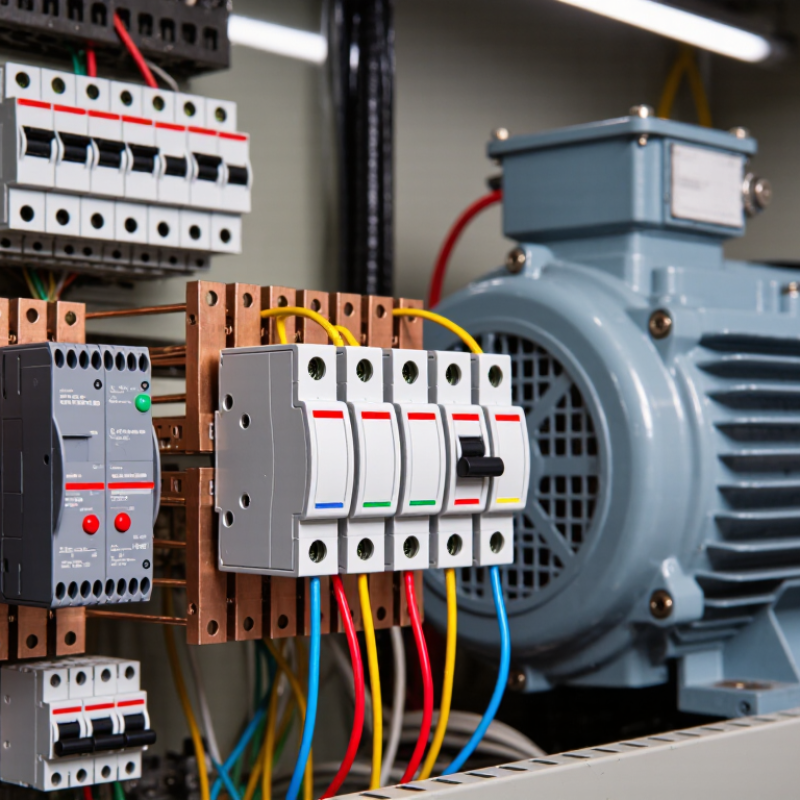
A fast-acting fuse is a sacrificial overcurrent device with a fusible element inside an insulating body. When current rises beyond its designed range, heat builds in that element until it melts and opens the circuit. The process can happen quickly. It is not always instantaneous: the fuse’s response depends on both the current level and how long it flows.
Inside an industrial machine, a fault may expose a drive, power supply, or semiconductor component to damaging current. A fast-acting fuse can limit the time that current continues, helping reduce equipment damage. As the element breaks, an electrical arc may form; the fuse body is designed to contain and extinguish it. Ratings matter. Voltage, current, interrupting capacity, and the fuse’s I²t value all affect whether it suits a particular circuit.
A small control cabinet offers a useful picture: a fuse sits in series with the circuit, ready to disconnect it when abnormal current persists. Choosing one by current rating alone is a common oversimplification. It must also coordinate with the protected components and the machine’s operating conditions. A fuse that opens too readily can cause needless downtime; one that responds too slowly may not protect sensitive equipment. The details are easy to miss.
Why Do Industrial Machines Use Fast Acting Fuses?
When a machine’s insulation fails, fault current can rise before a breaker reacts. A fast-acting fuse melts its element quickly, opening the circuit and limiting the energy that reaches motors, drives, and control boards. The key measure is let-through I²t: current squared over the fuse’s clearing time. Lower let-through energy can reduce thermal and mechanical stress on nearby parts.
Speed matters. But it is not the only factor. IEC 60269-1 sets requirements for low-voltage fuse-links, including breaking-capacity tests; specified classes include a 6 kA minimum under defined conditions. That figure is not a universal selection value. Engineers must match the fuse’s voltage and interrupting rating to the installation’s prospective fault current, then check its time-current curve and I²t data against the equipment.
In a plant, a short circuit near a variable-speed drive may generate a sharp current pulse. A properly selected fuse can clear that pulse before conductors overheat. Very quickly. Yet a fuse rated too low may open during normal motor starting, while one rated too high may not protect delicate components. Real-world coordination deserves a second look: temperature, enclosure airflow, and repeated inrush can change operating margins. Testing the actual circuit matters.
Industrial equipment often contains power electronics that can fail quickly during a short circuit. A fast-acting fuse is designed to interrupt excessive current with little delay. Inside a drive cabinet, that may help protect semiconductor components from intense fault energy. The fuse does not make a machine invulnerable. It limits one important risk.
Milliseconds matter. A fuse’s clearing time and energy let-through must match the equipment it protects. For example, a variable-speed drive may need a fuse selected for its input circuit and the manufacturer’s specified protection requirements. Choosing only by the machine’s normal current can be misleading. Fault current, voltage rating, and available short-circuit current also matter.
Fast protection is not always the right choice for every circuit. Motors can draw a brief surge when starting, and an unsuitable fuse may open during normal operation. Engineers therefore coordinate fuse characteristics with cables, contactors, drives, and expected starting conditions. That takes careful review. In practice, labels and drawings can be incomplete, so the installed circuit should be checked before replacement. A fast-acting fuse is a precise protective component, not a universal upgrade.
At a constant 1,000 A, accumulated electrical stress (I²t) rises with time: a 10 ms interruption corresponds to 10,000 A²s, while 20 ms corresponds to 20,000 A²s. Rapid-acting fuses can limit fault duration and help reduce the stress imposed on sensitive equipment. These are calculated values for a constant-current example, not fuse performance ratings; actual fault currents and clearing times depend on the circuit and fuse.
Common Industrial Applications of Fast-Acting Fuses
Fast-acting fuses are commonly used in variable-frequency drives, rectifiers, and industrial power supplies. These systems contain semiconductor components that can be damaged quickly by short-circuit current. A fuse installed in a drive’s power circuit can interrupt a fault before it causes wider component damage. Timing matters.
They also appear in soft starters, uninterruptible power supplies, welding equipment, and some automated production lines. In a control cabinet, a fuse may protect a sensitive power-conversion section while separate devices protect motors and wiring. The exact arrangement depends on the machine’s design.
Selection takes more than matching the fuse’s current rating. Engineers check voltage, interrupting capacity, and the fuse’s I²t rating, then coordinate it with the protected components and expected fault current. A fuse that opens during normal inrush can create avoidable downtime; one that is too slow may not protect semiconductors. During commissioning, checking the equipment documentation and measuring operating conditions can reveal mismatches. It is not a perfect safeguard, and that limitation deserves attention. Fast-acting fuses protect specific circuits; they do not replace sound system design or other required protection.
Why Do Industrial Machines Use Fast Acting Fuses?
Factors That Guide Fast-Acting Fuse Selection
Fast-acting fuses disconnect fault current quickly, helping protect sensitive components such as drives, power supplies, and semiconductor switches. Their speed matters when a short circuit could damage a circuit before slower protection responds. But “faster” is not automatically safer. A fuse that opens during normal motor-start current can stop production just as surely as a fault.
Selection starts with the machine’s operating voltage, normal current, and expected inrush. Check the fuse’s time-current curve and I²t rating against the protected component’s limits. Its interrupting rating must also exceed the prospective short-circuit current at the installation point. IEC 60269-1 defines low-voltage fuse requirements for circuits up to 1,000 V AC or 1,500 V DC. That scope is a useful reference, not a substitute for checking the actual circuit. Ambient heat, enclosure temperature, and coordination with upstream protection can change the result. A tidy calculation can still miss a hot cabinet.
Tips: Compare the fuse curve with the machine’s start-up profile. Record the measured fault level, then have a qualified engineer verify the selection.
| Selection Factor | Why It Matters | Practical Selection Guidance |
|---|---|---|
| Protected equipment | Power semiconductors such as diodes, thyristors, and IGBTs can be damaged quickly by high fault currents. | Compare the fuse’s total-clearing I²t with the protected device’s withstand data. The fuse’s value must be low enough to provide the required protection. |
| Fuse operating speed | A fast-acting fuse can limit fault energy and disconnect a circuit quickly when a short circuit occurs. | Use the fuse’s time-current curve and I²t data rather than relying on the “fast-acting” label alone. Clearing time depends on the fault current and the specific fuse design. |
| Fuse utilization category | Different fuse categories are designed for different protection duties. | Under IEC 60269, gG fuses provide full-range general-purpose protection; aR fuses provide partial-range semiconductor protection; gR fuses provide full-range semiconductor protection. An aR fuse may require separate overload protection. |
| Continuous operating current | A fuse must carry normal load current without unwanted opening, including under the machine’s actual operating conditions. | Choose a rated current based on the load and applicable standards, then account for ambient temperature, enclosure conditions, and manufacturer derating guidance. |
| Startup and transient current | Motors, transformers, and capacitor-input power supplies may draw brief currents above their normal operating current. | Check the startup-current profile against the fuse time-current curve. If the fuse opens during normal starting, review the fuse category and coordination rather than simply increasing its rating. |
| System voltage | A fuse must be capable of safely interrupting a fault at the circuit’s operating voltage. | Select a fuse with a voltage rating at least equal to the maximum system voltage. Confirm the fuse is specifically rated for AC or DC use as required; AC and DC ratings are not automatically interchangeable. |
| Prospective short-circuit current | The available fault current at the installation determines the interrupting duty the fuse may face. | Ensure the fuse’s interrupting rating is equal to or greater than the prospective short-circuit current at its installation point. |
| Coordination with other protective devices | Correct coordination can help isolate a fault while limiting unnecessary shutdown of other machine circuits. | Compare time-current curves and let-through energy for the fuse, upstream protection, and downstream devices. Verify selectivity using the relevant device data and system fault levels. |
| Standards and physical fit | Electrical ratings alone do not guarantee that a fuse is suitable for a particular fuse holder or installation. | Verify the applicable standard, fuse dimensions, holder compatibility, terminal requirements, and installation instructions. IEC 60269 and UL 248 are examples of fuse standards used in industrial applications. |
Important: Fast-acting fuses are useful where rapid fault interruption is needed, especially for semiconductor protection. The correct choice depends on the machine’s load profile, fault level, coordination requirements, and the equipment manufacturers’ protection data.
It is a sacrificial overcurrent device with a fusible element inside an insulating body. Excess current heats the element until it melts and opens the circuit. Not always instantly.
When the element melts, it breaks the circuit. An electrical arc may form, and the fuse body is designed to contain and extinguish it.
It can limit how long damaging current flows through equipment such as drives, power supplies, and semiconductor components. It reduces one risk, but does not make a machine invulnerable.
No. Voltage, interrupting capacity, I²t, fault current, and operating conditions also matter. One number is not the whole story.
It relates to the energy let through by the fuse before it clears. That value should suit the components being protected.
Yes. A fuse selected too readily may open during normal operation, including a motor’s brief startup surge. That detail is easy to overlook.
Check the drive’s input circuit and specified protection requirements. Coordinate the fuse with cables, contactors, and expected operating conditions.
No. Check the circuit, ratings, and component coordination before replacement. Labels and drawings can be incomplete, so the installed setup deserves a second look.
Fast-acting fuses are designed to melt quickly when current rises beyond a safe level, opening the circuit and limiting the energy released during a fault. This rapid interruption helps reduce damage to wiring, control systems, and sensitive components such as power electronics. In industrial settings, faults can develop quickly, so prompt protection may prevent equipment failure and lengthy downtime. This explains why do industrial machines use fast-acting fuses instead of slow-blow fuses: when a circuit contains components that cannot tolerate sustained overcurrent, a slower response may allow damaging energy to pass through.
These fuses are commonly used in power supplies, variable-speed drives, automation equipment, and electronic control circuits. Selecting the right fuse requires checking the circuit’s operating current and voltage, expected fault current, required interrupting capacity, and the fuse’s energy-limiting characteristics. Engineers should also account for normal startup surges and the equipment’s operating conditions. A suitable choice balances fast fault protection with reliable operation during ordinary machine startup and use.

Phlox Energy