Why Weatherproof Solar Cable Connections Last Longer begins with a practical question: how to weatherproof solar cable connections for long term use without creating hidden risks?
NREL’s widely cited photovoltaic degradation review reports a median annual module degradation rate of about 0.5%. That figure reflects complete systems, not cable connections alone. Still, it shows how small losses accumulate. Moisture, ultraviolet exposure, thermal cycling, and poor crimping can turn a clean connector into a hot, brittle failure point. The 2024 Kiwa PVEL PV Module Reliability Scorecard also emphasizes environmental stress testing, including damp heat, humidity-freeze cycles, and mechanical loading. These tests resemble real rooftop conditions: morning condensation, harsh sunlight, wind movement, and trapped water beneath cable clips.
Details matter.
PV safety specialist John Wiles repeatedly emphasized, “A PV system is only as safe as its weakest component.” His warning applies directly to cable assemblies. Use compatible, certified connectors. Keep mating surfaces clean and fully locked. Support cables so they never hang from the connector. Seal penetrations with correctly rated glands, while preserving drainage paths. Avoid tight bends, exposed copper, and mixed connector brands.
This is not a perfect checklist. Field conditions vary, and even careful installations can age unevenly. That limitation deserves attention. The strongest approach combines manufacturer instructions, IEC 62548 design guidance, qualified inspection, and documented torque or crimping records. Weatherproofing is not one layer of sealant. It is a chain of small decisions that keeps water away from conductive surfaces for decades.
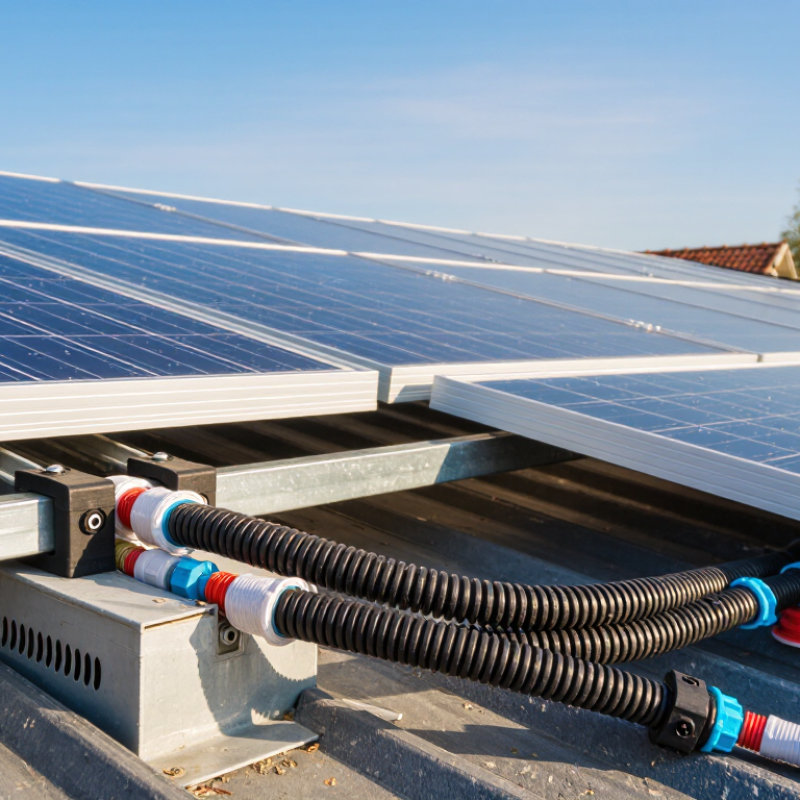
Why Weatherproof Solar Cable Connections Last Longer?
How IEC 62930 PV Cables Withstand 25+ Years of Outdoor Exposure
Outdoor solar cables face ultraviolet radiation, rain, heat, frost, and daily expansion. IEC 62930:2017 defines performance requirements for single-core photovoltaic cables used in DC systems up to 1.5 kV. Its testing addresses insulation, sheath durability, ozone resistance, and environmental stress. These tests support long service life. They do not guarantee 25 years on every roof.
Field evidence remains useful. The IEA PVPS Task 13 reports that well-designed photovoltaic systems commonly show annual performance losses near 0.5%. A widely cited NREL review, covering about 2,000 systems, found a similar median degradation rate. Cable failures are often less visible. Moisture may enter a poorly compressed connection. Heat can then accelerate corrosion inside the contact area.
The weak point is often the connection.
Tips: Keep cable bends smooth, respect the specified stripping length, and use compatible connectors. Check that cables do not rest in standing water or rub against metal edges. During inspections, look for whitening, cracks, loose contacts, and unusual heat marks. IEC testing cannot recreate every rooftop detail. Installation quality still decides much of the outcome. That is easy to underestimate.
Weatherproof solar cable connections last longer because they control moisture at the most vulnerable point. IP68-rated connectors are designed to block dust and resist water ingress under defined test conditions. Their sealing rings compress around cable jackets and contact surfaces. A secure locking system also prevents small gaps caused by vibration or cable movement.
In field installations, water often enters through poor assembly rather than heavy rain alone. A damaged seal, unevenly cut cable, or loose connection can create a hidden path. IP68 protection helps, but it cannot correct careless installation. Technicians should keep connector interiors clean and dry before mating them. They should also check that the seal sits evenly, without twists or pinching.
Corrosion needs moisture, oxygen, and time. Once water reaches metal contacts, electrical resistance can rise and heat may develop. Sealed connectors reduce this exposure, especially on rooftops, coastal sites, and ground-mounted arrays. Strong housing materials and proper strain relief add another layer of protection. Still, no rating guarantees permanent performance. UV exposure, thermal cycling, rodents, and repeated maintenance can weaken surrounding components.
Periodic inspection remains necessary, even when the connector looks intact. A connector may appear dry outside while corrosion develops inside. That possibility deserves attention.
UV-resistant insulation helps solar cable connections endure years of sunlight, heat, and outdoor moisture. IEC 60068-2-5 testing simulates solar radiation under controlled conditions. It examines changes such as cracking, discoloration, brittleness, and loss of mechanical strength. Good insulation does more than block ultraviolet light. It also maintains flexibility around connectors and cable bends. This matters on rooftops, where dark surfaces can become extremely hot. Small cracks can expose the conductor and invite moisture. Eventually, corrosion may increase electrical resistance.
Tips: Keep connectors away from standing water and sharp edges. Check insulation for chalking, stiffness, or fine surface cracks during maintenance. Use proper cable clips, not tight ties that pinch the jacket. Clean dust carefully. Dirt can hold heat against the insulation.
A laboratory result provides useful evidence, but it cannot reproduce every installation. Roof angle, local climate, salt air, and poor cable routing change real-world aging. IEC 60068-2-5 testing should support material selection, not replace site inspection. In practice, reliable connections usually combine UV-resistant insulation, sealed interfaces, correct crimping, and strain relief. One overlooked detail can matter. Even strong insulation may fail early when water repeatedly enters a badly fitted connector. Periodic inspection remains worthwhile, especially after severe heat, storms, or construction work nearby.
Why Weatherproof Solar Cable Connections Last Longer?
A solar connection faces heat, rain, vibration, and daily current changes. Proper crimping creates a dense metal path with low electrical resistance. Lower resistance produces less I²R heating at the contact point. Under rated operating loads, a correctly made joint can remain below 90°C. That margin helps protect insulation, seals, and nearby components.
The process begins with the correct terminal, cable size, and crimping die. The conductor should reach the terminal’s inspection area without exposed strands. A firm crimp removes air gaps and limits movement. It should also pass a controlled pull test. Then, the weatherproof seal must sit evenly around the cable jacket. Small gaps can admit moisture. Moisture encourages corrosion and raises resistance over time.
A cool connection matters.
Field checks should include visual inspection, torque verification, and thermal imaging during realistic loading. A gauge reading alone does not prove a reliable crimp. I have seen neat-looking joints fail because the conductor was only partly inserted. Another common mistake is crimping insulation instead of bare copper. These errors are easy to miss, especially during rushed installation. Cable routing also matters, since tight bends can stress the terminal after assembly. No connection stays perfect without inspection. Load conditions, ambient temperature, and aging can change the result, so measurements should be repeated when performance seems unusual.
A solar connector faces rain, dust, ultraviolet light, and daily temperature swings. IEC 62852 sets requirements for photovoltaic DC connectors, including insulation, temperature rise, mechanical strength, and resistance to environmental stress. These tests matter because a slightly loose contact can create heat at the connection point. Repeated heating may damage insulation and increase arcing risk.
The IEA PVPS Task 13 reports repeatedly identify connectors and junction boxes as recurring photovoltaic failure locations. NREL’s PV Fleet Performance Data Initiative also places typical system degradation near 0.5% per year, although poor connections can create sharper, localized losses. In field inspections, technicians often find discoloration, cracked seals, or mismatched connector parts before an obvious shutdown. The danger is quiet. A connection may look acceptable while its contact resistance rises.
Tips: Use only compatible connector types. Check crimp height and pull strength. Keep seals clean and fully seated. Never rely on hand-tightening alone. Thermal imaging can reveal abnormal heating during peak production.
Experience also exposes an uncomfortable detail: installation quality can weaken a compliant product. IEC testing cannot correct careless routing, unsupported cable weight, or water trapped near the seal. Annual inspections help, but inspection intervals should reflect local dust, humidity, and heat. A perfect checklist still needs practical judgment.
It blocks dust and resists water ingress under defined testing conditions. It is not permanently waterproof.
They compress around cable jackets and contact surfaces. Even pressure closes small pathways.
Poor assembly is often the bigger risk. A twisted seal or loose lock can admit water.
Keep connector interiors clean and dry. Check that each seal sits evenly without pinching.
Corrosion needs moisture, oxygen, and time. Metal damage can create resistance and unwanted heat.
A firm crimp creates a dense metal path with low resistance. Under rated loads, temperatures can remain below 90°C.
Partial conductor insertion, exposed strands, or crimping insulation instead of bare copper can create trouble. Small errors matter.
Not always. A connection may look clean while hidden corrosion develops inside.
Use visual checks, torque verification, controlled pull tests, and thermal imaging during realistic loading.
Ultraviolet exposure, temperature cycling, vibration, rodents, and repeated maintenance can affect nearby parts. Periodic inspection remains necessary.
Weatherproof solar cable connections are designed to maintain reliable performance through decades of outdoor exposure. PV cables meeting IEC 62930 requirements use durable materials that resist moisture, temperature changes, mechanical stress, and aging. IP68-rated connectors help prevent water ingress, while corrosion-resistant contact materials reduce degradation in humid or demanding environments. UV-resistant insulation also supports long-term durability by withstanding sunlight exposure and the conditions evaluated under IEC 60068-2-5 testing.
Learning how to weatherproof solar cable connections for long term use also requires careful installation. Proper crimping creates a stable electrical and mechanical connection, helping keep contact heating below 90°C under operating loads and reducing energy loss. Connections designed and assembled in line with IEC 62852 principles can further lower the risks of arcing, loose contacts, and premature failure. Together, suitable cable construction, sealed connectors, UV protection, and accurate termination help solar systems operate more safely and consistently for 25 years or longer.

Phlox Energy